
LATEST POSTS
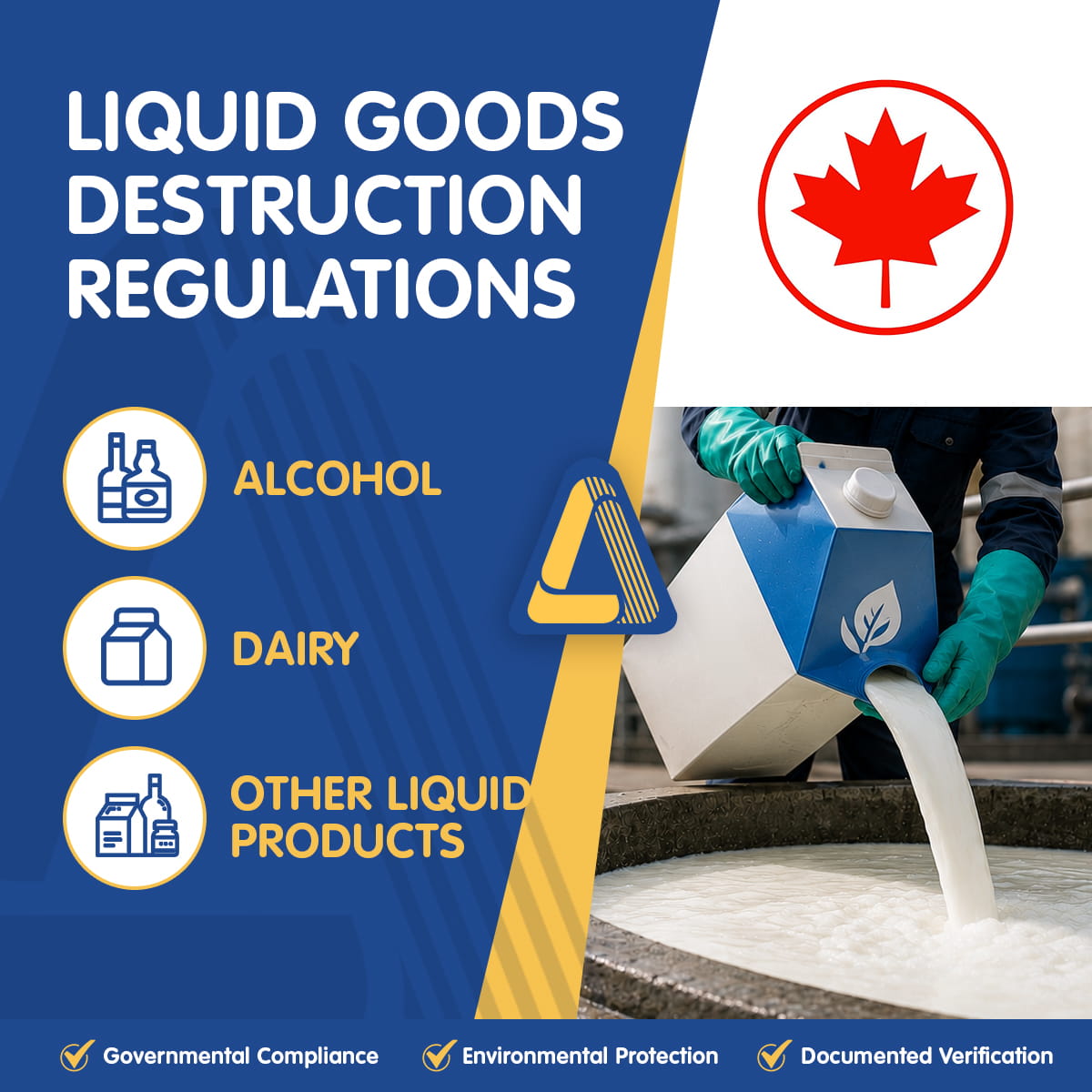
Businesses across Canada that manufacture, distribute, or store regulated liquid products—such as alcohol, dairy, and other consumable goods—must follow strict federal and provincial rules when destroying expired, contaminated, or unsellable inventory.
This guide breaks down the essential CRA regulations, documentation requirements, and compliance steps for destroying alcohol, dairy, and other liquid goods in Canada.
Alcohol Product Destruction Regulations
A Certificate of Destruction (CoD) is one of the most important documents in secure disposal, compliance, and risk management. Whether you’re destroying sensitive documents, electronic media, prototypes, or regulated waste, a Certificate of Destruction document provides formal proof that materials were permanently and irreversibly destroyed according to industry and regulatory standards.

In today’s marketplace, protecting your brand doesn’t end when a product reaches the end of its lifecycle. Returns, expired goods, damaged inventory, outdated packaging, and branded materials all carry risk long after they leave your warehouse or retail store shelves. This is when a documented and systematic process for tracking these materials, known as Chain of Custody, becomes essential.

When products, components, packaging, or branded materials aren’t destroyed securely, they don’t simply “go away.” They can enter a secondary ecosystem. Understanding how these risks emerge is the first step toward protecting your brand’s reputation, revenue, and customer trust.
Counterfeit and Grey‑Market Risks from Improper Disposal