
LATEST POSTS
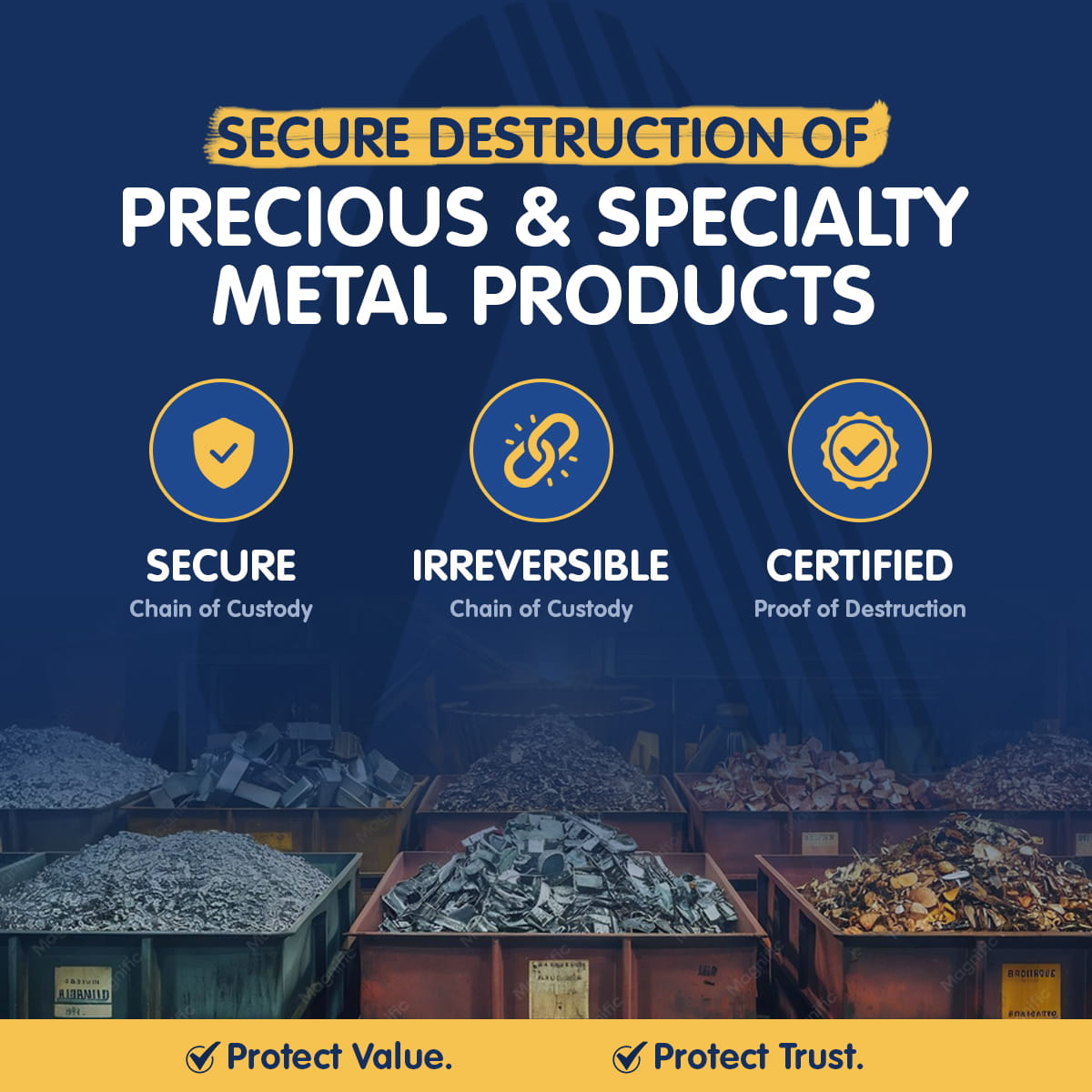
Why Precious and Specialty Metals Require a Different Level of Destruction
Destroying products made from precious metals, high‑value alloys, or specialty engineered materials isn’t anything like shredding paper or disposing of standard consumer goods. These materials carry significant financial value, strict regulatory controls, and often brand‑protection risks if they re‑enter the market through unauthorized channels.
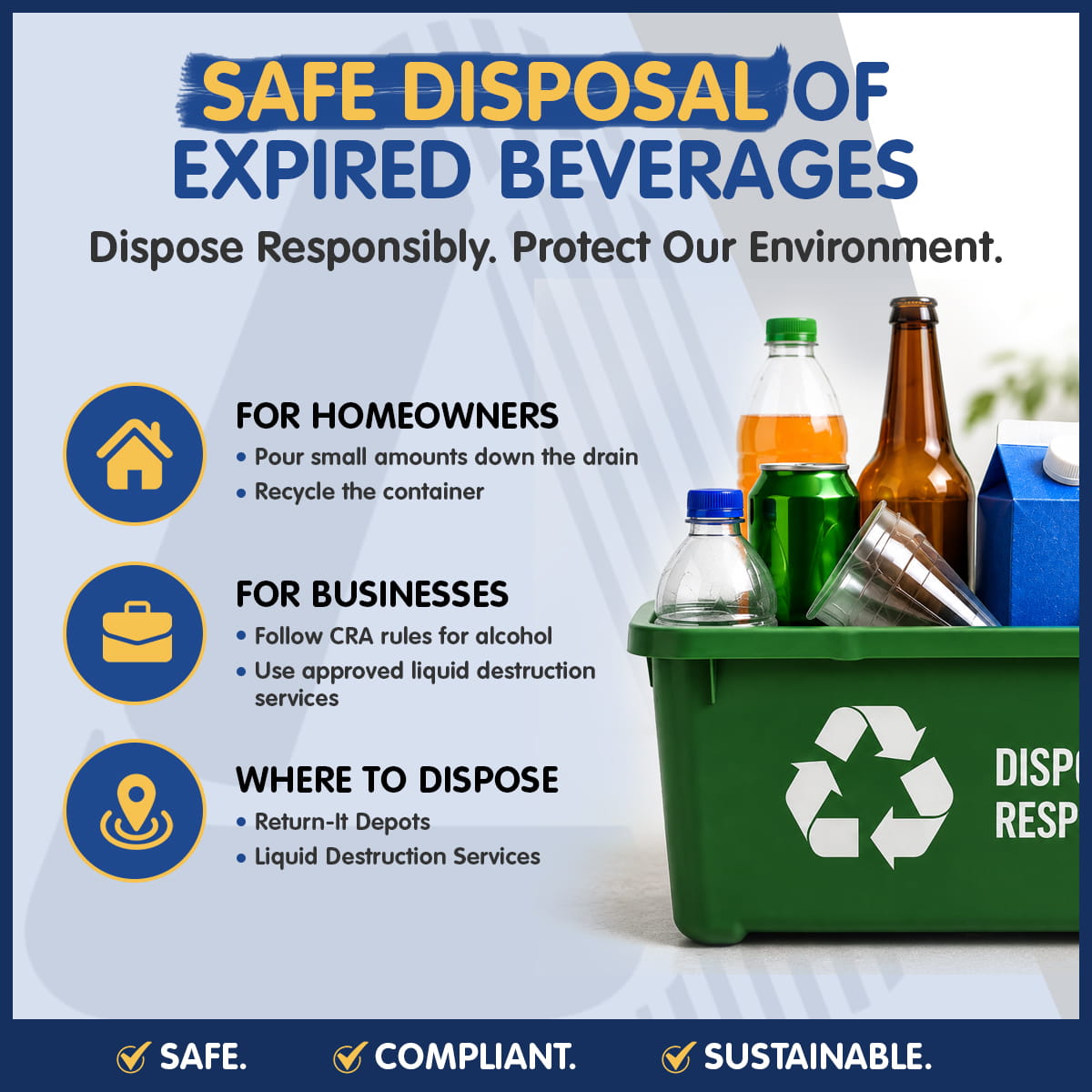
How to Dispose of Expired & Stale‑Dated Beverages Safely in Canada
Expired or stale‑dated beverages, whether soft drinks, juices, kombucha, alcohol, dairy‑based drinks, or specialty beverages, must be disposed of properly to protect the environment, comply with Canadian regulations, and prevent contamination in waste streams. Whether you’re a homeowner cleaning out the pantry or a business managing large volumes of outdated inventory, safe beverage disposal is essential.
Why Proper Beverage Disposal Matters
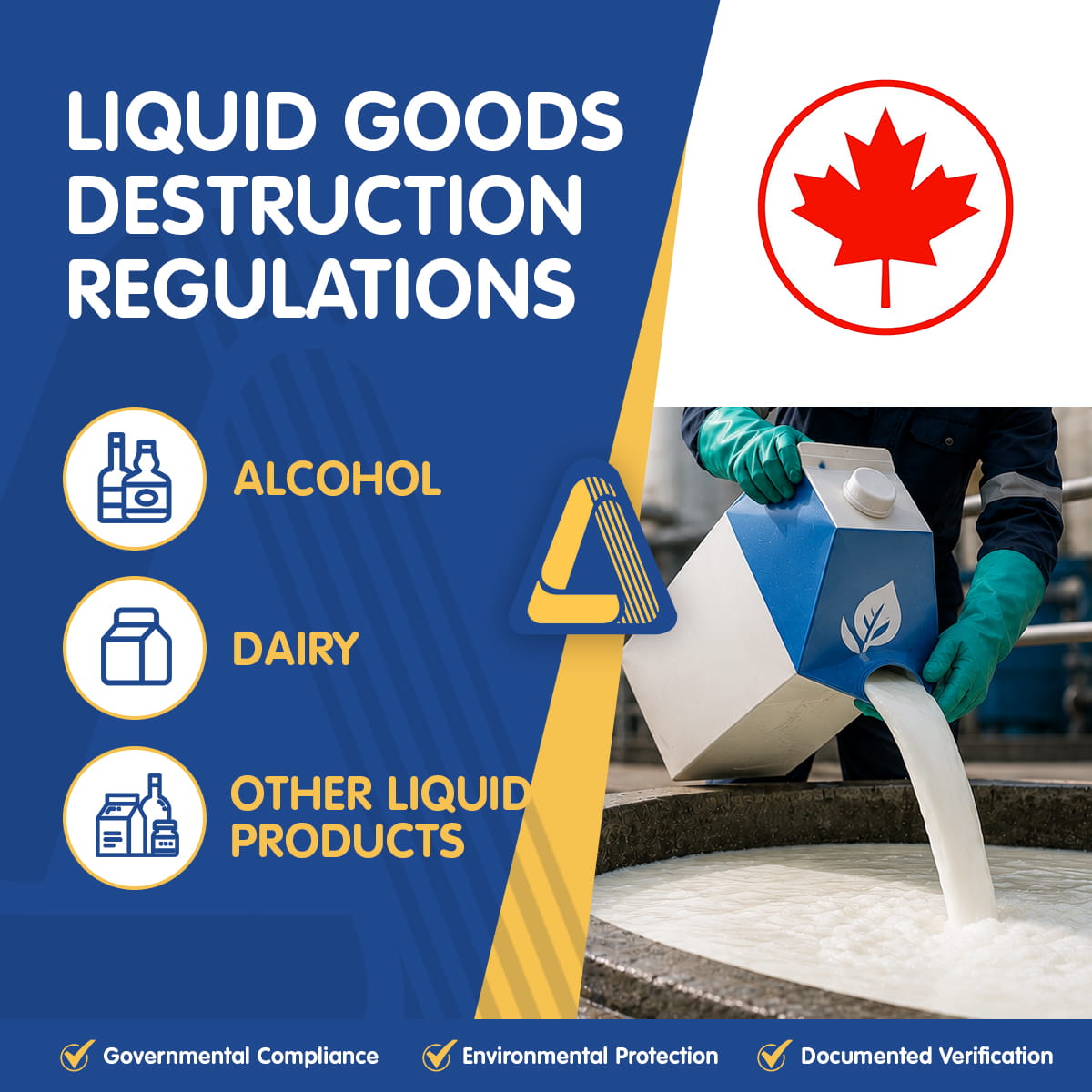
Businesses across Canada that manufacture, distribute, or store regulated liquid products—such as alcohol, dairy, and other consumable goods—must follow strict federal and provincial rules when destroying expired, contaminated, or unsellable inventory.
This guide breaks down the essential CRA regulations, documentation requirements, and compliance steps for destroying alcohol, dairy, and other liquid goods in Canada.
Alcohol Product Destruction Regulations
A Certificate of Destruction (CoD) is one of the most important documents in secure disposal, compliance, and risk management. Whether you’re destroying sensitive documents, electronic media, prototypes, or regulated waste, a Certificate of Destruction document provides formal proof that materials were permanently and irreversibly destroyed according to industry and regulatory standards.