How to Dispose of Expired & Stale‑Dated Beverages Safely in Canada
Expired or stale‑dated beverages, whether soft drinks, juices, kombucha, alcohol, dairy‑based drinks, or specialty beverages, must be disposed of properly to protect the environment, comply with Canadian regulations, and prevent contamination in waste streams. Whether you’re a homeowner cleaning out the pantry or a business managing large volumes of outdated inventory, safe beverage disposal is essential.
Why Proper Beverage Disposal Matters
Environmental Impact
Many beverages contain sugars, acids, alcohol, dairy, or additives that can disrupt wastewater systems. High‑BOD (biological oxygen demand) liquids, like dairy drinks or juices, can harm waterways if improperly disposed of.
Regulatory Compliance
Businesses in Canada must follow provincial environmental rules and, in the case of alcohol, CRA excise regulations. Improper disposal can lead to fines, environmental violations, or compliance issues during audits.
Operational Safety
Liquids in garbage bags can leak, cause mold, attract pests, or damage waste collection equipment. Large volumes of expired beverages can also overwhelm municipal waste systems.
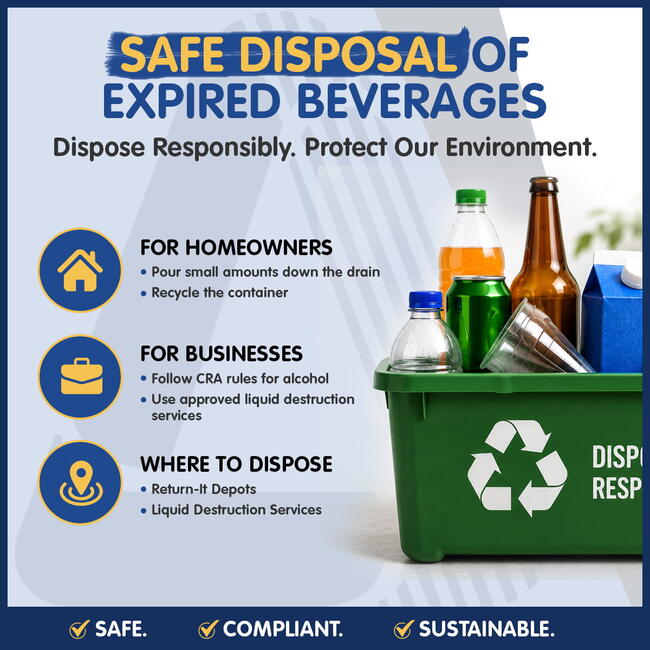
How to Dispose of Expired Beverages Safely for Residential
1. Empty the Beverage Safely
Residents can pour small quantities of expired beverages down the sink, as long as the liquid is non‑hazardous and the municipality allows it. Most household beverages like juice, soda, tea, coffee, and non‑dairy drinks are safe for residential drains.
2. Recycle or Dispose of the Container
Once empty, recycle the bottle, can, or carton according to your local recycling program. In Metro Vancouver, containers can be returned to Return‑It Depots for deposit refunds.
3. Avoid Pouring Dairy or Large Volumes Down the Drain
Dairy beverages, protein shakes, and cream‑based drinks can cause plumbing issues and should be disposed of in small quantities or taken to a municipal facility.
How Businesses Should Dispose of Expired or Stale‑Dated Beverages
1. Follow CRA Rules for Alcohol
Expired alcoholic beverages may require:
- CRA notification
- Documentation of destruction
- Approved disposal methods
- Certificates of destruction
2. Use Approved Liquid Destruction Services
Commercial beverage destruction ensures:
- Environmental compliance
- CRA excise compliance
- Secure chain‑of‑custody
- Proper wastewater handling
- Certificates of destruction for audits
3. Never Dump Large Volumes Down Drains
Municipal wastewater bylaws prohibit high‑BOD liquids, alcohol, and large quantities of sugary beverages from entering the sewer system.
Where to Dispose of Expired Beverages in Vancouver, BC
Metro Vancouver Transfer Stations
Accept sealed expired beverages from businesses and residents. Locations include:
- Vancouver South Transfer Station
- North Shore Transfer Station
- Coquitlam Transfer Station
Return‑It Depots
Many depots accept sealed expired beverages for recycling and deposit refunds.
Commercial Liquid Destruction Companies
Businesses with large volumes such as grocery stores, beverage distributors, breweries, warehouses, and food manufactures, can use certified destruction providers offering:
- Secure pickup
- CRA‑compliant alcohol destruction
- Environmental documentation
- Bulk liquid processing
Frequently Asked Questions: Safe Disposal of Expired & Stale‑Dated Beverages
1. Can I pour expired beverages down the drain?
Small amounts of non‑hazardous beverages—such as water, tea, coffee, or diluted juice—can usually be poured down residential drains. However, businesses must follow municipal wastewater bylaws, and large volumes of sugary, alcoholic, or dairy‑based beverages should never be poured down the drain due to environmental and compliance risks.
2. How should businesses dispose of expired alcoholic beverages?
Expired alcohol must be destroyed according to CRA excise regulations, which require documentation, approved destruction methods, and sometimes formal notifications. Most companies use certified liquid destruction services to ensure compliance.
3. Can expired beverages go in the garbage?
It’s best to avoid throwing full or partially full beverages in the garbage. Liquids can leak, attract pests, damage waste equipment, and cause contamination. Always empty containers first or use a certified destruction service for bulk volumes.
4. What’s the safest way to dispose of dairy‑based drinks?
Dairy beverages have high biological oxygen demand (BOD) and can disrupt wastewater systems. Dispose of small amounts at home, but businesses should use approved destruction or municipal facilities.
5. Where can I take expired beverages in Vancouver, BC?
Residents and businesses can use Metro Vancouver Transfer Stations, Return‑It depots, or certified liquid destruction companies for safe disposal.
6. Do I need documentation for beverage destruction?
Businesses often do—especially for alcohol or large volumes. Certified destruction vendors provide chain‑of‑custody records and certificates of destruction for audits and compliance.
7. Can expired beverages be recycled?
The containers can be recycled, but the liquid must be disposed of safely. Some depots accept sealed expired beverages for deposit refunds.
Proper disposal of expired or stale‑dated beverages protects the environment, ensures regulatory compliance, and keeps waste systems functioning safely. Whether you’re a homeowner with a few old drinks or a business managing pallets of expired inventory, following safe disposal practices is essential.
Pacific Material Destruction is an expert in properly handling and disposing of expired & stale‑dated beverages. Get a fee quote today.