A Behind‑the‑Scenes Look at How Modern Destruction Plants Work
Most people never see what happens inside a product destruction facility — and that’s exactly the point. These facilities are designed for security, precision, and complete control over the destruction process. Whether the goal is brand protection, regulatory compliance, or preventing gray‑market diversion, destruction plants operate with a level of rigor that surprises many first‑time visitors.
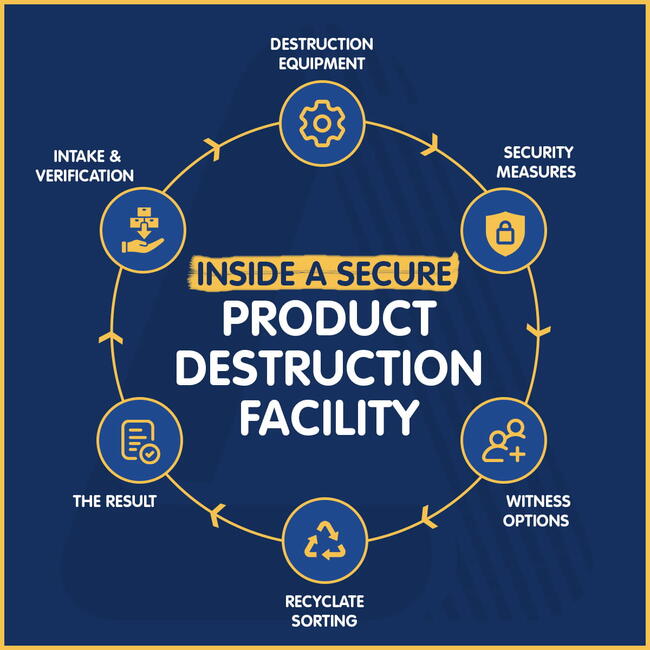
This article takes a peek at the a behind‑the‑scenes tour of how these facilities work, including intake procedures, destruction equipment, security measures, witness options, and how recycle is sorted after destruction. This is article is a general outline; actual processes can vary from plant to plant and in compliance with local and federal regulations.
Where Secure Handling Begins
Every destruction project starts long before any product reaches tool that will destroy it. Intake is a controlled, documented process designed to verify exactly what is being destroyed.
Products arrive at the secure receiving bay, where staff check load documentation, verify quantities, and confirm lot numbers or SKUs. This step ensures the facility is handling the correct materials and establishes the chain of custody. Once verified, the goods are weighed on certified scales and moved into restricted storage areas until destruction is scheduled.
Intake typically includes:
- Verification of product type, quantity, and packaging
- Government‑certified weighing
- Secure off‑loading and staging
- Chain‑of‑custody documentation
This front‑end process is essential for compliance and transparency, especially for regulated goods like food, beverages, alcohol, pharmaceuticals, and branded consumer products.
The Equipment Inside the Destruction Floor
Once products move from intake to the destruction floor, the facility shifts into high‑power mode. Modern destruction plants use industrial equipment capable of reducing packaged goods, electronics, textiles, and even metal components into unrecognizable fragments.
The two most common machines are:
Shredders
Large, slow‑speed shredders tear through pallets, packaging, and products with powerful steel knives. They’re ideal for bulky items, mixed loads, and anything requiring complete brand protection.
Granulators
Granulators take shredded material and break it down even further. Their high‑speed cutting chambers produce smaller, uniform particles, useful for recyclate recovery or ensuring total destruction of branded components.
Together, these machines create a destruction workflow that is fast, controlled, and fully documented.
Security Measures to Protect & Prevent
Security is the backbone of any destruction facility. Because many products carry brand value and/or regulatory risk. Facilities are designed to prevent unauthorized access or diversion at every step.
Common security measures include:
- 24/7 surveillance with long‑term video retention
- Restricted access zones and locked destruction bays
- Bonded, background‑checked staff
- Controlled visitor access
- Secure storage for pre‑destruction inventory
These layers ensure that once a product enters the facility, it cannot re‑enter the marketplace.
Witnesses are Transparency for Brand Owners
Many brands choose to witness destruction for added assurance. Facilities offer several options depending on the client’s needs:
- In‑person witnessing from a secure observation area
- Live video witnessing for remote teams
- Recorded destruction footage for audit or insurance purposes
Witnessing provides peace of mind and supports compliance documentation, especially for high‑value goods, regulated products, or sensitive brand protection projects.
Recyclate Sorting Happens After Destruction
Once products are shredded or granulated, the remaining material enters the sorting phase. This is where recyclate recovery happens.
Facilities use magnets, air separation, and manual sorting to separate materials such as:
- Metals
- Plastics
- Cardboard
- Organics
- Mixed waste
Whenever possible, recyclate is sent to approved recycling partners. This reduces landfill impact and supports sustainability goals without compromising security.
Why Secure Destruction Matters
Secure destruction facilities play a critical role in protecting brands, meeting regulatory requirements, and preventing unauthorized resale. From intake verification to shredding, witnessing, and recyclate sorting, every step is designed for transparency, safety, and complete product elimination.
At Pacific Material Destruction, our secure product destruction facility meets the requirements for any job. Get a fee quote today.