In today’s marketplace, protecting your brand doesn’t end when a product reaches the end of its lifecycle. Returns, expired goods, damaged inventory, outdated packaging, and branded materials all carry risk long after they leave your warehouse or retail store shelves. This is when a documented and systematic process for tracking these materials, known as Chain of Custody, becomes essential.
A secure, documented Chain of Custody ensures that every item meant for destruction is tracked, verified, and protected from the moment it leaves your facility until the moment it is permanently destroyed. Without a Chain of Custody, products can slip into counterfeit networks, grey‑market resale channels, or unauthorized hands, potentially creating significant financial, reputational, and regulatory consequences.
What Chain of Custody Means in Product Destruction
At its core, Chain of Custody is a controlled, step‑by‑step process that documents exactly who handled your materials, when they handled them, and where they went. It creates a tamper‑proof record that prevents diversion and ensures accountability at every stage.
A strong Chain of Custody includes:
- Secure product destruction procedures
- Material tracking and verification
- Audit trail documentation
- Certificate of destruction
- Brand protection services
This process ensures your branded materials never re‑enter the market — intentionally or accidentally.
Why Chain of Custody Matters for Brand Protection
1. Prevents Counterfeiting and Grey‑Market Resale
Improperly discarded products, packaging, or components can be scavenged and reused to create convincing counterfeits. A verified Chain of Custody eliminates the raw materials counterfeiters rely on.
2. Protects Customer Trust
When expired, unsafe, or defective products resurface online, customers assume the brand is responsible. Chain of Custody ensures those items never reach consumers.
3. Supports Regulatory Compliance
Industries like pharmaceuticals, cosmetics, electronics, and food face strict disposal requirements. Chain of Custody provides the documentation needed to prove compliance.
4. Eliminates Diversion Risks
Every transfer is logged, sealed, and verified — preventing unauthorized access or resale.
5. Strengthens Sustainability and ESG Reporting
Many destruction providers offer recycling‑forward processes. Chain of Custody ensures those materials are handled responsibly and transparently.
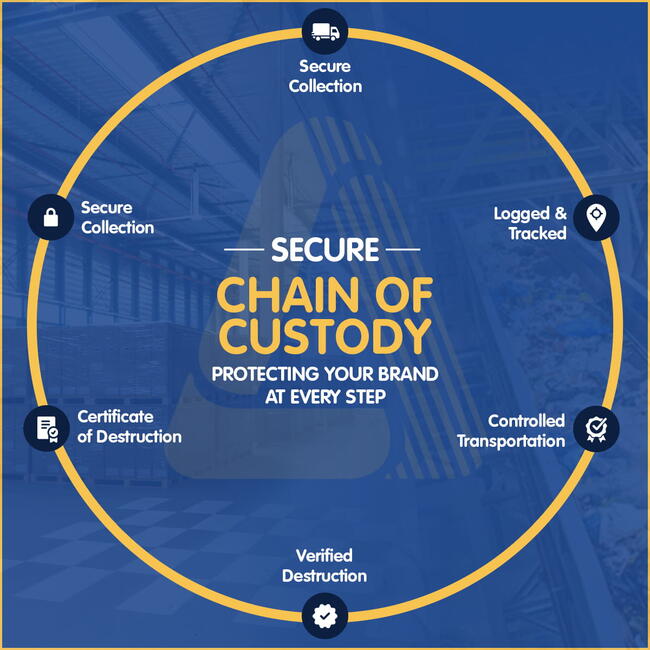
How Chain of Custody Works Step‑by‑Step
1. Secure Collection
Materials are placed in sealed, tamper‑resistant containers and picked up by trained personnel.
2. Logged Transfer
Each handoff is recorded, creating a continuous audit trail.
3. Controlled Transportation
Locked vehicles and GPS‑tracked routes ensure materials remain secure.
4. Verified Destruction
Products are destroyed using certified processes — shredding, crushing, disassembly, or specialized destruction depending on the material.
5. Certificate of Destruction
You receive official documentation confirming the date, method, and verification of destruction.
6. Reporting & Compliance
Detailed records support internal audits, regulatory requirements, and brand protection strategies.
Chain of Custody Bottom Line
A secure Chain of Custody is more than a compliance requirement — it’s a powerful brand protection tool. It prevents counterfeit activity, eliminates grey‑market diversion, protects customer trust, and ensures your branded materials are handled responsibly from start to finish.
If your business needs a secure process to handle returns, expired goods, defective inventory, or branded materials, a verified Chain of Custody isn’t optional. It’s essential.
Ready to strengthen your Chain of Custody?
Partner with Pacific Materials Destruction for secure, verified product destruction that protects your brand, your customers, and your reputation.